
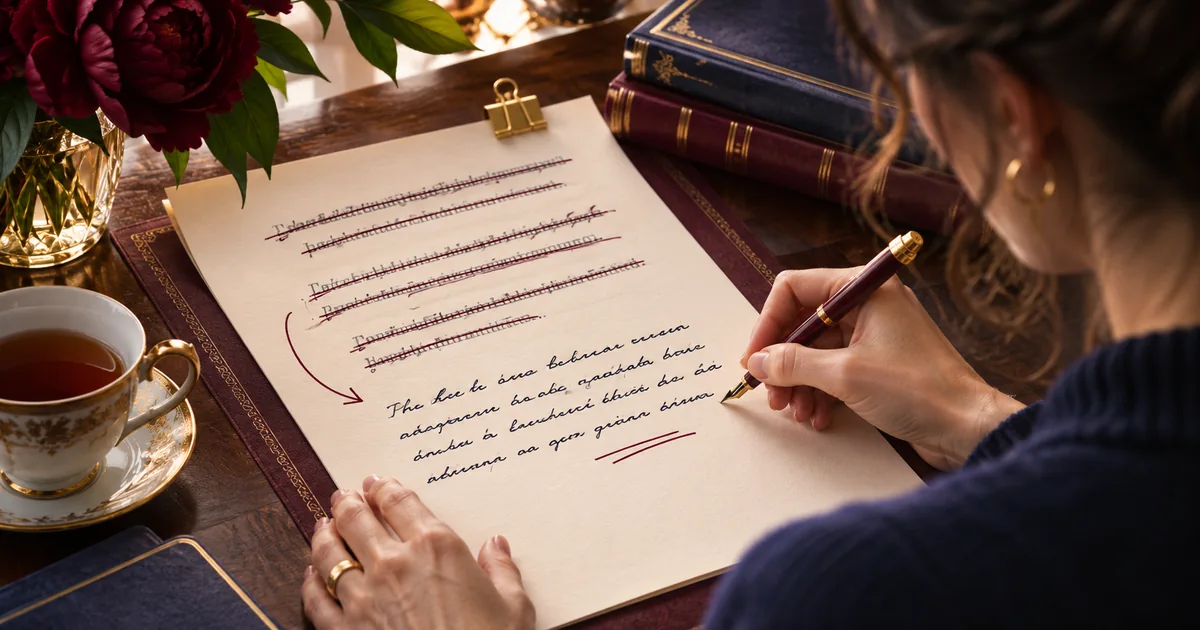
A book description is a buying aid. It should help the right reader recognize the subject, experience, and reason to continue. It does not need to prove that the book contains everything you know.
Begin with the reader's question: “Is this the kind of book I want right now?” Answer it before adding background about how long you worked on the manuscript.
Choose the appropriate opening
For fiction, introduce the central situation and pressure. Give enough specificity to distinguish the story without explaining the ending.
For memoir, identify the experience and stakes while preserving the complexity of the actual book. Avoid turning a difficult life story into a sensational promise the narrative does not support.
For practical nonfiction, name the reader and problem. Explain what the book helps them understand or do. Do not promise guaranteed financial, health, career, or personal outcomes.
Develop one clear thread
After the opening, add the most useful supporting details. A novel may need the protagonist's choice and its consequences. A guide may need the approach, scope, and a few concrete topics. A memoir may need the setting and the central change.
Cut sentences that repeat the same benefit using different adjectives. Words such as “essential,” “powerful,” and “life-changing” cannot replace a specific explanation.
KDP's description guidance recommends readable, easy-to-scan copy. Check the current content and formatting rules before uploading.
Use a hypothetical revision
Hypothetical weak version: “This groundbreaking book contains everything you need to become a successful manager.”
Hypothetical stronger version: “Your first team meeting is tomorrow, and nobody has explained how to lead it. This practical guide walks new managers through preparation, difficult questions, and follow-up, with examples you can adapt to your own team.”
The stronger version names a reader, a situation, and useful material. It does not claim that reading the book guarantees success.
Keep proof honest
Use endorsements only when they are authentic, approved, and permitted in the destination's rules. Preserve quotations exactly. Do not add bestseller labels, awards, credentials, or review claims you cannot substantiate.
If you have no endorsements, write a strong description without them. A clear premise is more useful than an invented authority signal.
Keep the author biography separate unless a specific fact is essential to the book's promise.
Test comprehension
Give the description to someone who has not read the manuscript. Ask what kind of book they expect, who it is for, and what they think happens or is taught.
If their answer differs from your intention, revise the copy. Do not explain the missing information verbally and count that as a successful test.
Check the description at phone-screen width and in the retailer's preview. Paragraph breaks and emphasis should aid reading, not create a wall of promotional formatting.
Maintain one approved version
Save the final copy with the exact title, subtitle, and author name. Adapt length for a back cover or media sheet without changing the underlying promise.
Use the cover brief to coordinate text and design, and the metadata guide to keep listings consistent. For memoir context, see how to publish a memoir. Contact Capitol Quill Press to discuss publishing setup and the marketing materials included in your scope.
Share this article