
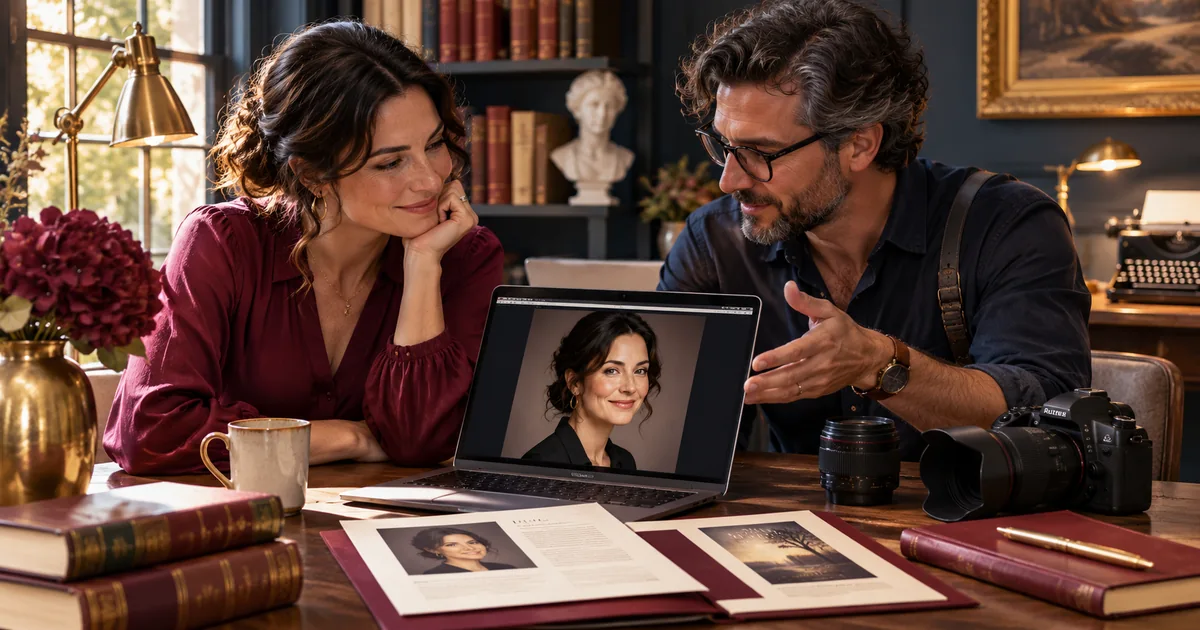
An author media kit helps a journalist, podcast host, event organizer, or bookseller understand the book and obtain accurate materials. It should be easy to navigate and current enough to use without guessing.
The kit does not create newsworthiness by itself. It removes friction when there is a relevant reason to feature the book or author.
Put the essential facts first
Include the exact title, subtitle, author name, genre, publication date, available formats, ISBNs where relevant, and official book link. Use the same approved information as your retailer metadata.
Add a concise description that explains the book's subject or story. Keep a longer description available if useful, but clearly label the versions.
If an edition is not yet available, say so. Do not describe planned distribution as confirmed.
Prepare biographies for different uses
Create a short introduction suitable for a host to read and a somewhat longer biography for a website or program. Both should contain verified, relevant facts.
Avoid inventing awards, bestseller status, academic credentials, or media appearances. If a detail cannot be substantiated, remove it or describe it accurately.
A first-time author can have a credible biography without a long publishing history. Explain the connection to the subject and the work itself.
Supply usable images
Provide an approved cover image and an authorized author photograph. Include filenames, credits, and any usage restrictions. A real author portrait should depict the actual author, not a generated substitute.
Offer images in sensible sizes and formats, and make clear which version is intended for print or web use. Do not send a folder full of near-identical files without identifying the preferred image.
Keep the image permissions with your permissions log.
Suggest conversations, not only questions about buying
List a few topics the author can discuss with substance. A memoirist might address the process of reconstructing a family history. A practical nonfiction author might explain a common misconception in their field.
Hypothetical example: A book about neighborhood volunteering can support a conversation about starting a small local project. That is a more useful interview angle than “Why everyone should buy my new book.”
Prepare sample questions as suggestions, not demands. Do not write fabricated answers attributed to a journalist or imply that an interview has already occurred.
Make contact and access simple
Include the appropriate public contact and a clear route to request a review copy or event conversation. Keep private addresses and personal records out of the public kit.
Test download links on a phone and in a private browser window. A link that works only while you are signed into your own account is not ready for distribution.
Date the kit and update it when the cover, publication date, links, or availability changes.
Our first-book launch plan explains how the kit supports a focused campaign. The existing company-selection guide helps you ask what marketing deliverables a provider actually supplies. Contact Capitol Quill Press to discuss launch materials and confirm the work included in your project.
Share this article